
Our Judgment
A well-crafted solo Metroidvania with a sharp central idea and honest combat, held back by the modern habit of wrapping the threat in enough charm that the danger never fully settles in.
A dojo does not hand out participation trophies for showing up with a lit match.
A warrior who needs the world softened before he can face it has already conceded the field.
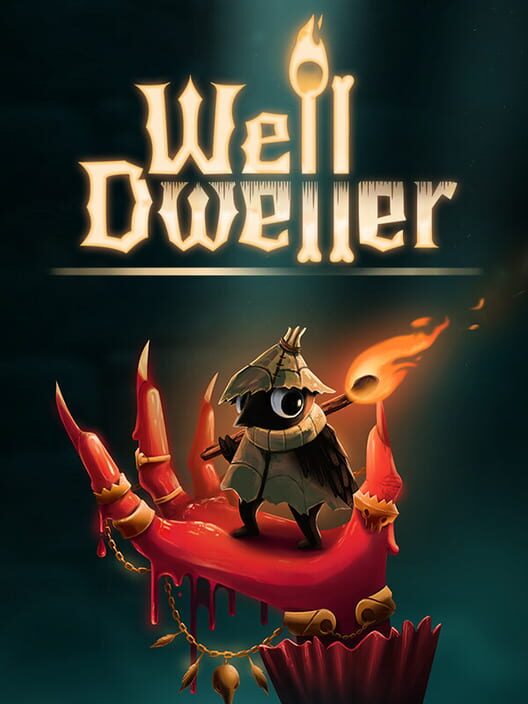
Well Dweller drops you into the feathers of Glimmer, a small bird living at the bottom of a well with what’s left of his family. The queen above has decided bird feathers make the perfect royal gown. Hunters are out collecting. Siblings are gone. Mother is too weak. Glimmer grabs a matchstick and climbs out to burn the problem at its source.
That premise has teeth. A kingdom rotting under a tyrant who turns living things into decoration is the kind of dark fairy-tale that used to mean something. The art sells it. Hand-drawn, storybook lines with enough rot and wrongness in the margins to keep the cute from winning. You move through the underbelly of this place, pick up abilities that open new routes, fight beasts that actually look like they belong in a nightmare, and collect trinkets that let you tweak how the matchstick behaves.

The matchstick itself is the best idea in the game. It is weapon, light source, and health bar all at once. Damage shortens the flame. You feel the pressure when it burns low. Lighting the dark and swinging at the same time creates a clean link between survival and aggression. When the combat clicks, it rewards staying sharp instead of button-mashing through waves. Bosses demand pattern reading. Exploration has the usual Metroidvania structure of locked paths that open once you earn the right tool. Secrets exist for people willing to look.
Kyle Thompson made this mostly alone, with his brother on music. That shows. The world feels consistent. The systems talk to each other. There is no committee sanding every edge off so no one feels left out. For an indie Metroidvania in 2026 that is already more honest than half the bigger titles that ship with training wheels and apology notes.
The softness still creeps in.

The charming side characters are everywhere. Tiny mouse on the run. Mysterious scavenger. Reunited siblings. They are written to be likable and a little quirky, the kind of cast that turns a dark fairy tale into something closer to a comfort tour with occasional spooky set pieces. The game wants you to befriend them, camp with them, feel the warmth under the rot. That works for a lot of players. It also dilutes the threat. A kingdom that should feel hostile keeps offering safe little pockets of personality so you never stay uncomfortable for long.
Progression is clear and generous. Abilities arrive when you need them. The map expands at a pace that keeps most players from getting truly stuck. Trinkets let you customize, but the ceiling on difficulty is not high enough to punish poor play for long. Failures are recoverable. The path of least resistance is always available if you take it. Modern design loves this. Old-school design would have made the dark cost more.
There is no overt lecture in the text. No forced messaging about who belongs in the kingdom or why the queen’s rule is really about something else. That is a relief. The story stays focused on a bird trying to save his family from being turned into clothing. Simple. Direct. The kind of motivation that does not need a sensitivity reader. Still, the overall tone leans hard into the “cozy dark” trend that has taken over so many indie titles. Cute protagonist. Soft edges around the horror. Enough charm to make the brutality feel temporary. It is effective at what it aims for. It is also the opposite of the hard, unforgiving fairy tales that used to leave a mark.

I climbed out of the well and I kept the match lit. I burned what needed burning and collected the trinkets that made the next stretch possible. The systems are tight enough that skill still matters. The world is drawn with real care. The problem is the same one I see too often now: the game is more interested in making sure you feel good about the journey than in testing whether you deserve to reach the end.
A real test does not keep offering you a campfire and a friendly face every time the dark gets thick. Well Dweller remembers how to swing the match. It just cannot stop softening the grip.