
Our Judgment
Looks like pure workplace violence. Plays like a proper combat craft once you stop underestimating the stickmen and start treating the company like something you actually have to run. More depth than expected, in a god way.
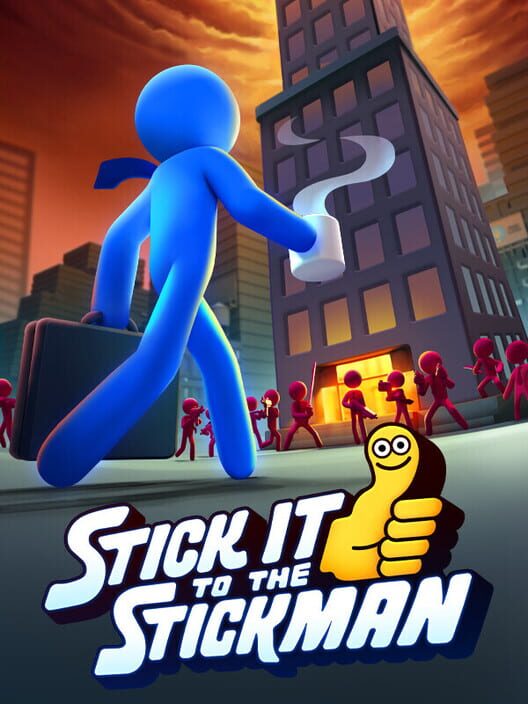
Most folks glance at Stick It to the Stickman and figure they’ve got the measure of it in five seconds. Blue stick figure punches red stick figures. Office setting. Lots of bodies flying around. Looks like pure button-mashing chaos with a corporate joke slapped on top. An old chud sensei sat down expecting exactly that and ended up staying far longer than planned.
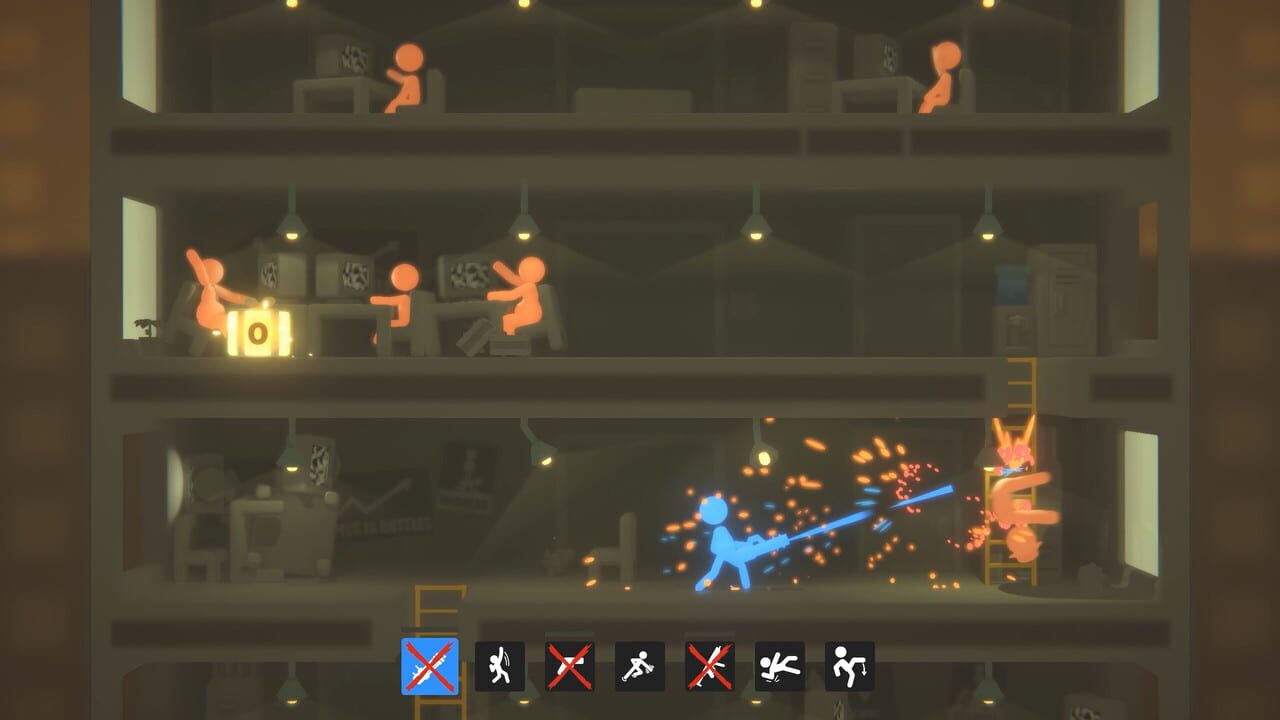
You start as some low-level employee and the only way up the ladder is to physically remove everyone above you. Floors of the office tower become arenas. Coworkers swarm in, scream about being fired, and try to knock you down before you do the same to them. The physics make every hit feel loose and mean. Bodies ragdoll across desks, bounce off walls, and sometimes launch straight out windows. It looks simple. It plays simple at first. One attack button cycles through whatever moves you currently have lined up. Press, press, press, and the sequence plays out.

That sequence is where the depth hides. You don’t just collect random power-ups. You build a combat portfolio. Early moves might be a basic punch, a kick, a thrown coffee mug. As you climb you add new ones or upgrade the ones you already have. An uppercut turns into a rising special. A kick becomes a bicycle kick or something even more ridiculous. Staple guns, glue guns, chainsaws, fireballs, ninja stars, telekinetic blasts once you start messing with brain chips. The list grows and the order matters. You’re constructing a machine that keeps swinging even when the screen fills with red stickmen. Different employee types start with their own kits and passives. The Temp multitasks. The Weeb runs and throws knives. Coffee addicts hit harder the more wired they get. You learn which combinations actually clear rooms and which ones leave you eating carpet when the next wave arrives.
Once you finally take the CEO chair the game opens up in a different direction. The shareholders show up and demand growth. That is when the real meta systems kick in. You start expanding the company itself. Money earned from runs gets spent on the stock market screen and on tower upgrades. Raising the stock value unlocks new facilities and modes. You can pour cash into the Finance Tower, open a Fulfillment Center full of conveyor belts and rogue forklifts, build an Employee Evaluation Center, add a Driving School, a Dojo, cage-fighting arenas, foreign manufacturing sites, night shifts, and more. Each expansion changes what the next runs look like. Floors get rearranged with new traps, extra elevators, environmental hazards, or harder enemy mixes. The tower itself grows and gets meaner while your permanent upgrades stick around.
The stock market is not just a scoreboard. It is the gate. Push the company value high enough and new modes open. Foreign Manufacturing brings travel-themed stages and cheaper labor gags. Other unlocks shift the presentation or add entirely different ways to play, like survivors-style Neurolink runs with mind powers or downward climbs through a billionaire bunker. Between combat stages you move around an overworld city map that represents the company’s reach. The board keeps demanding more growth, more risk, more shareholder value. Refusing the shareholders can end a run on the spot. Playing along lets you keep buying tower nodes that increase cash flow, add permanent buffs, or unlock more staff types for future climbs.

The satire never stops. Everything is framed around promotions, firings, and the endless demand for growth. The humor is crude and constant, but it sits on top of systems that actually reward attention. You start button-mashing and slowly realize you’re planning the next three move upgrades, watching the physics for openings, choosing which new attack will extend the combo, and deciding which facility to expand next so the stock price keeps climbing. The chaos stays fun because the rules underneath it are solid.
It is still a physics brawler at heart. Sometimes the ragdolls send you flying when you meant to stand firm. Sometimes the screen gets so crowded that clean play disappears and pure aggression wins. The comedy can wear thin if you run the same floors too many times in a row. But the surprise is real. What looks like a dumb office brawler turns out to be a roguelite with a full corporate growth layer on top of the combat. Move portfolios, employee archetypes, tower expansions, stock market unlocks, and a growing list of modes all feed into each other.