
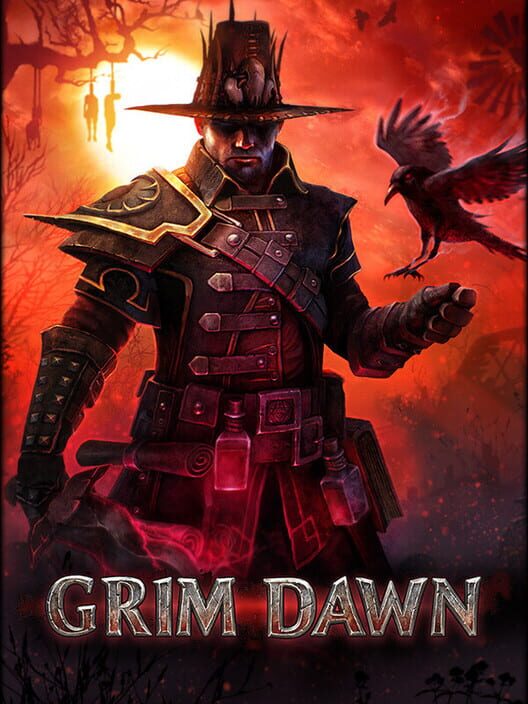
Our Judgment
A single path can make a competent warrior. Two paths, properly joined, can make something the darkness did not prepare for. Choose carefully. Then choose again.
Some games hand you a class and tell you to live with it.
Grim Dawn hands you a choice, then later hands you a second one, and quietly expects you to make them work together.
That is the heart of the game.
You begin as almost nothing. A survivor in a ruined world called Cairn, where humanity has been pushed to the edge by forces it barely understands. At level 2 you open the skill window and select your first Mastery. This is not a minor decision. Each Mastery is a full identity with its own history, tools, and way of solving problems.
A Soldier feels like a disciplined veteran of a fallen empire, built around endurance, formation fighting, and controlled aggression. A Nightblade moves like a professional killer, favoring speed, deception, and precise violence. An Occultist deals in pacts, curses, and things that should not be trusted. A Demolitionist turns combat into engineering, scattering fire, explosives, and calculated chaos. An Arcanist treats magic like a dangerous science. A Shaman draws power from the wild and the primal.

Later Masteries expand the list further, but the principle remains the same: each one is complete on its own.
Then, at level 10, the game asks the real question. What will you combine it with?
This is where Grim Dawn separates itself from most action RPGs. The second Mastery is not a small splash of flavor or a secondary skill tree. It is a full second class. Both trees remain fully available. Your character becomes a hybrid defined by the conversation between those two sets of skills. The combinations are not cosmetic. They create new playstyles that neither Mastery would produce alone.
A Soldier who later takes Occultist becomes something harder and stranger than a pure front-line fighter.
A Demolitionist who adds Arcanist starts solving encounters with layered elemental destruction.
A Nightblade paired with Shaman moves differently, hits differently, and survives differently.
Some pairings emphasize raw durability. Others lean into damage, summons, resistance reduction, mobility, or unusual synergies that only appear when specific skills from both sides are used together.
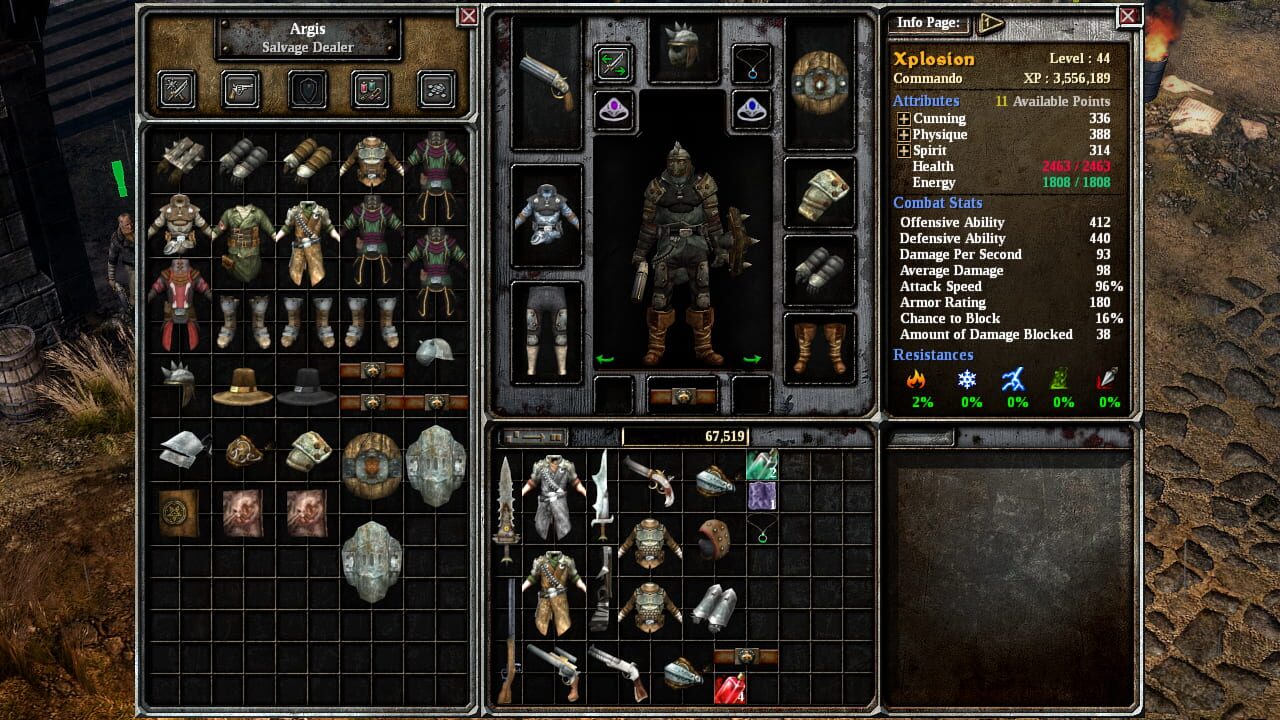
The system is flexible without becoming messy. You can pour most of your points into one Mastery and treat the second as support. You can split more evenly. You can chase very specific interactions between skills, or simply take the second Mastery for the attributes, passives, and general power it provides. The game does not punish these different philosophies. It supports them. Respec options exist. Experimentation is expected. Many players will restart characters not because they failed, but because they want to see how a different pairing feels.
This is why the dual-class system carries so much of the game’s long-term appeal. Finishing the campaign with one combination does not feel like finishing Grim Dawn. It feels like finishing one version of it. The next character, built around a different pair of Masteries, changes the rhythm of combat, the value of loot, and even the way you move through familiar areas. Gear that was unremarkable on one build can become central on another. Skills that felt optional suddenly become the foundation of a new approach. The loot hunt remains satisfying because it is always feeding a specific vision you chose and refined yourself.
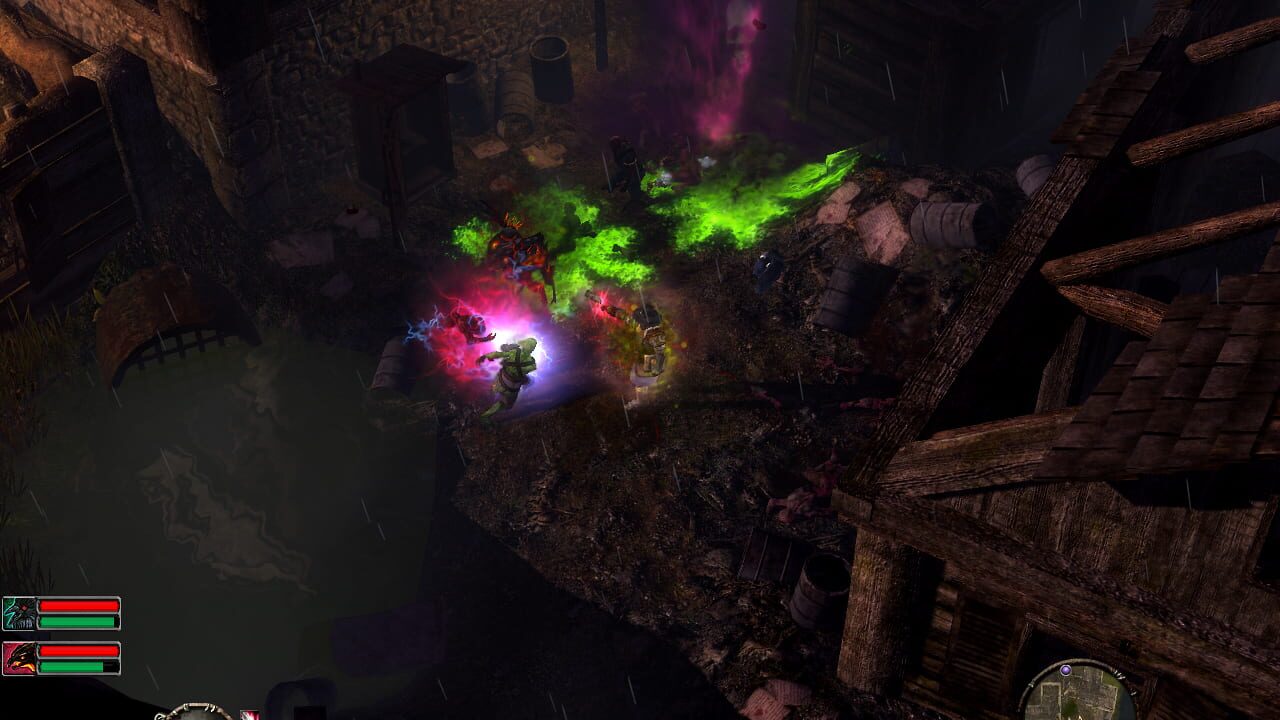
Of course the game is more than its class system. Cairn is a consistently strong setting: bleak, hostile, and full of small details that reward attention. Combat has weight. Enemies are varied enough to keep encounters from feeling identical. The progression curve is demanding without becoming cruel. The expansions add real content and new Masteries rather than simple repetition. Multiplayer works if you want it. Solo play is fully viable and often ideal for theorycrafting.
But the dual Mastery system is the foundation. It turns character building into the main long-term pleasure of the game. Many action RPGs offer theorycrafting. Fewer make the act of joining two complete classes feel this natural, this deep, and this replayable. Grim Dawn understands that the best builds are not just statistically strong. They feel personal. They feel like something you assembled from two distinct traditions of violence, magic, and survival.
I have returned to this game more times than I expected. Each time the question is the same: which two Masteries will I walk with this time?
That question has not gotten old.