
Our Judgment
A dual-life action thriller with grounded combat ideas and an adult premise, still rough in execution and softened by a day-job loop that keeps the night work from costing everything it should.
A dojo does not give a man two lives and then protect him from the cost of both.
A warrior who needs the day job to stay comfortable while the night work stays cinematic has already admitted he cannot carry the full weight of either.
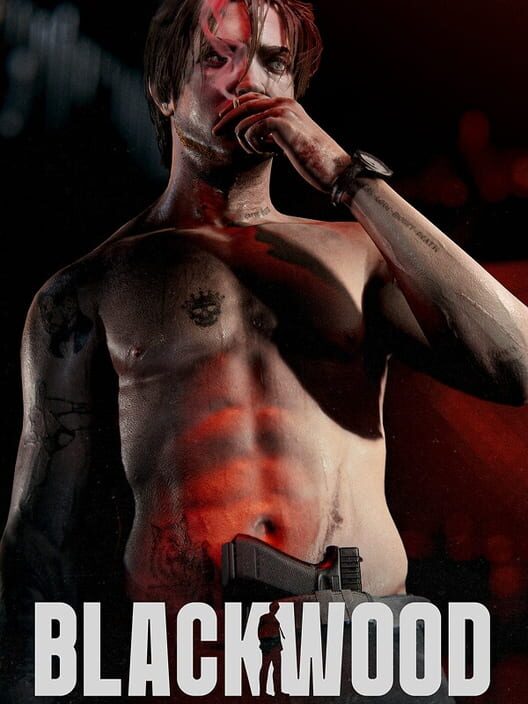
BLACKWOOD drops you into 2012 Brooklyn as Anton Blackwood. Days are spent running a small DVD store that actually needs attention if you want clean money. Nights are spent taking contracts and putting people down for the dirty side of the ledger. Bills come due every month. Miss the payments twice and the game ends. That pressure is one of the few things here that still feels adult.

The combat is where the game shows its real ambition. Ammo is finite and counted honestly, chambered round included. Health does not top itself off between fights. Contextual takedowns are the main recovery tool: you close distance, finish someone by hand, take their weapon, and get a slice of health back. Dives, slides, and rolls keep the movement aggressive instead of cover-camping. When a fight opens up and the timing lands, it has the weight of older cinematic shooters without the modern habit of turning every kill into a slow-motion cutscene that forgives bad decisions.
The problem is consistency. Act 1 still fights itself. Enemy AI can lock up. Controls occasionally ignore inputs in the middle of a scramble. Some rooms feel more like wrestling the systems than solving the encounter. A game that wants to be taken seriously as a hard-edged assassin fantasy cannot afford that kind of friction. The tools are there. The polish is not.

The store side of the life is the softer half. You stock shelves, deal with customers, walk around your apartment, and keep the front half of the operation running so the night half can continue. Clean money and dirty money stay separate. On paper the contrast is sharp. In practice the day job often feels like padding between the parts that matter. It gives you a safe place to return to and a second currency to lean on. That safety net is exactly the kind of modern design choice that keeps the real cost of the night work from landing as hard as it should.
The writing stays out of the way. Anton is a man with a past, not a walking talking point. No sermons. No forced inclusion notes. The story is about survival, money, and the practical problem of keeping two lives from destroying each other. That alone puts it ahead of a lot of current releases that cannot resist turning every premise into a lecture.

Act 1 is only the opening chapter of a three-act plan. The later acts are promised free to owners. That means what exists right now is incomplete by design. The combat has real potential when it works. The dual-life idea has teeth when the pressure is allowed to stay on. Right now both halves still feel like they are negotiating with modern expectations instead of enforcing older ones.
I kept the store running, took the contracts, and treated every empty magazine and every botched takedown as my own failure. The game understands the fantasy of living two lives. It has not fully decided whether that fantasy should demand real accountability or keep offering soft landings between the blood and the bills.
A man who lives two lives should feel the weight of both. BLACKWOOD understands the fantasy. It has not fully decided whether it is willing to make that fantasy hurt.